Start with three dinners and leave space
Look at the week before choosing recipes. Mark the evenings when you will be home, how much time you have and how many people will eat. Pick three dinners for a first plan. Leave room for leftovers, a simple cupboard meal or a change of plans instead of filling every day.
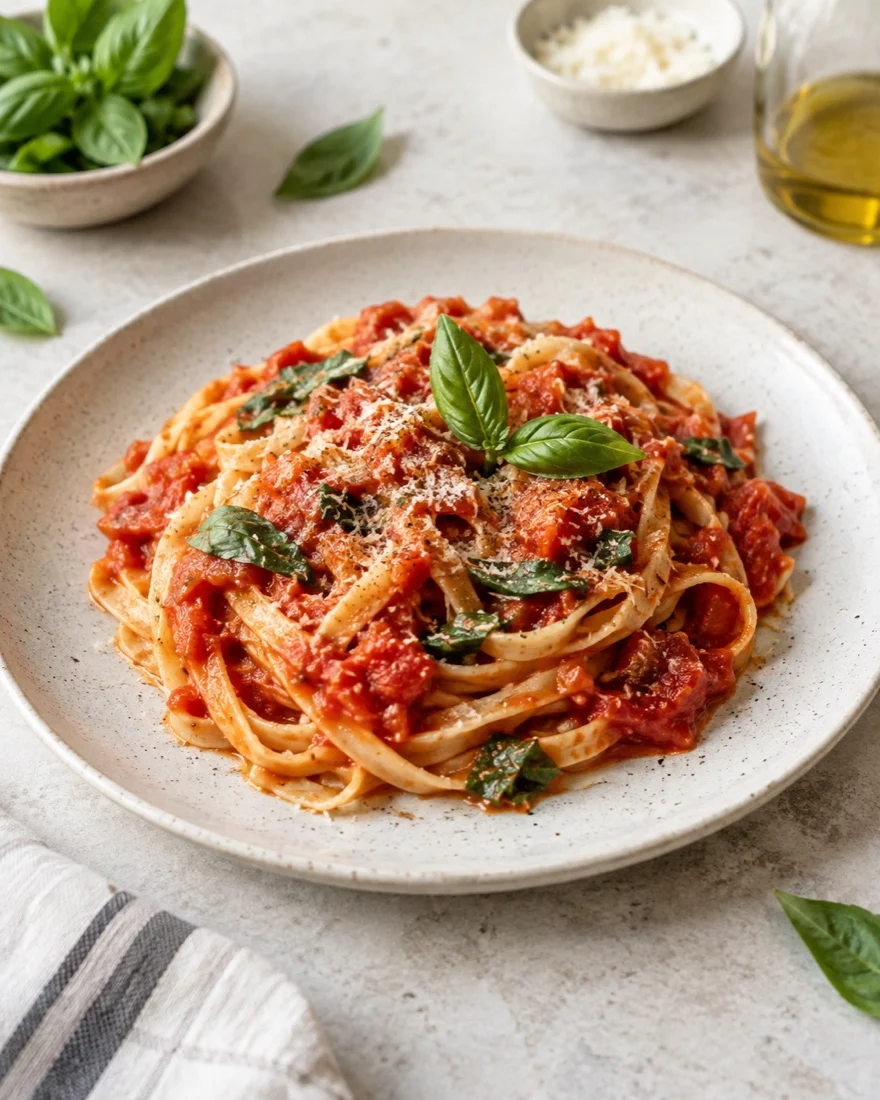
Match the meal to the day. Tomato and basil pasta fits a short cooking window. A chilled dessert belongs on a day when its cooling time works for you. Read total time, including resting and chilling, rather than judging effort from the number of ingredients.
Check the fridge and cupboard first
Before adding anything to a shopping list, look at what you already have. Note opened ingredients, fresh produce and small amounts that are easy to overlook. Choose one meal that uses those ingredients, then build the rest of the menu around a few useful overlaps.
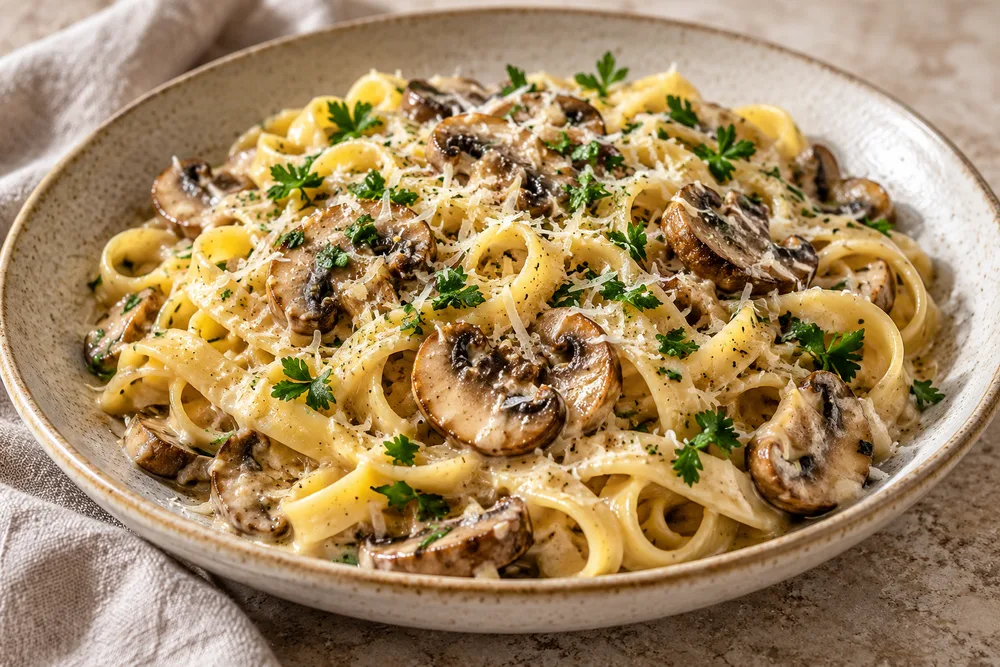
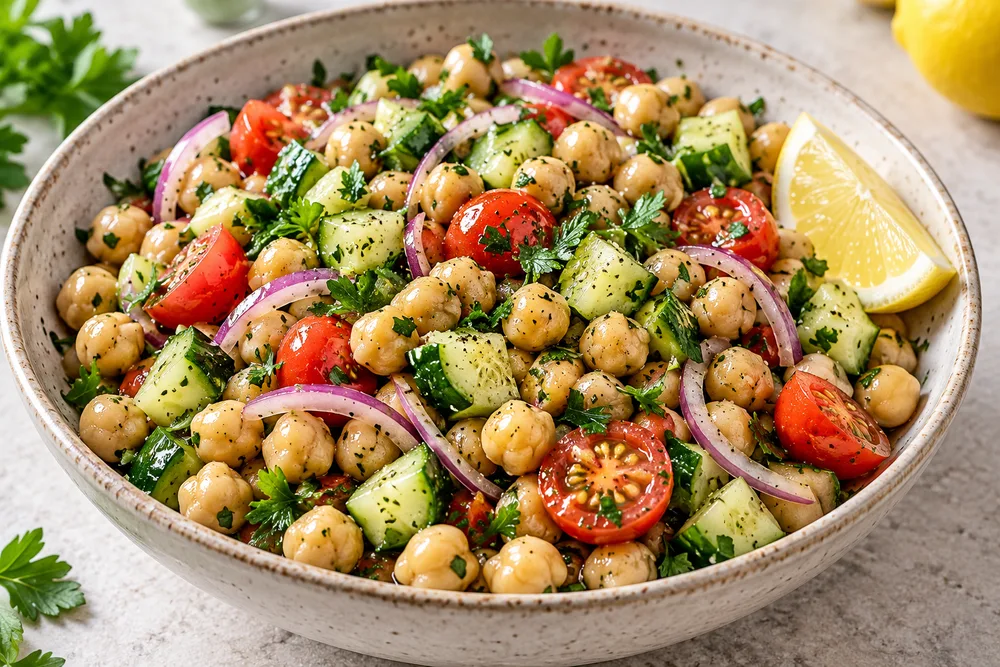
For example, parsley can finish mushroom pasta and go into a chickpea salad. Tomatoes work in both a quick sauce and a salad. Sharing ingredients does not require eating the same dish repeatedly. Keep the plan flexible enough to use ripe produce first and follow the storage guidance on each product.
Set portions before combining the shopping list
Check each recipe’s serving count and adjust it to the people you are feeding. Only then combine the ingredients across meals. If two recipes call for 200 g and 300 g of the same tomatoes, start with a combined requirement of 500 g, then subtract what you already have.
Review combined entries before buying. Grams and millilitres are not interchangeable, and a tin’s total weight differs from its drained weight. Check whether similar names describe the same product: fresh cream, sour cream and cream cheese serve different purposes. Round purchases to available pack sizes after you calculate the amount you need.
- Remove cupboard staples you already have in sufficient quantities.
- Combine matching ingredients only when their form and units agree.
- Keep optional garnishes separate from ingredients essential to the recipe.
- Add household essentials separately so they do not get lost among recipe ingredients.
Choose substitutions with a purpose
Think about what an ingredient does before replacing it. In a salad, a different crisp vegetable often keeps the dish recognisable. In a cheesecake, changing cream cheese or flour affects structure and needs more care. Use a recipe written for the replacement when a major change matters.
Check the substitute’s allergens and packaging even if the original ingredient suited your needs. Update the quantity in your list and note the change with the recipe. A useful substitution fits the cooking method and the people eating, as well as what is available in the shop.
Check store details at the point of purchase
Treat store matches and prices as shopping aids. Availability, pack sizes and prices depend on the retailer, branch and time you shop. An ingredient match needs a quick review: confirm the actual product, amount and variant before putting it in your basket.
Use the final shop or checkout price for your budget. If a product is unavailable, choose a suitable replacement or adjust the meal plan. After the week, keep the meals you enjoyed and change the part that caused friction. Next week’s plan can start from that small, practical record.